News

MOT Kicking Off Phase Two of Electric Robotaxis Test Runs-5
Sunday, November 22, 2026
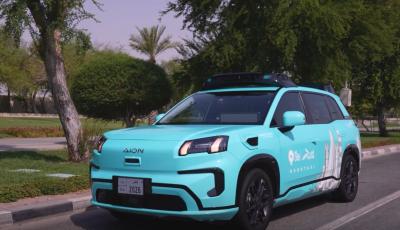
MOT Kicks Off Phase Two of Electric Robotaxis Test Runs

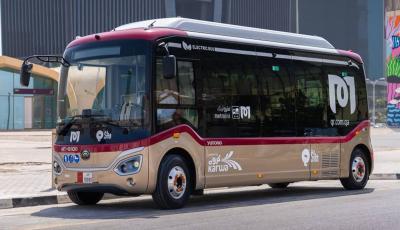
The Ministry of Transport, in coordination with Mowasalat (Karwa), has announced the start of the second phase of electric robotaxis test operation.Phase 2 trials will be carried out in Doha. It features the test run of two level-4 electric robotaxis for 12 months in specific routes previously mapped and approved by the MOT: Old Doha Port, Museum of Islamic Art (MIA), Souq Waqif, West Bay, and Sheraton Doha Hotel, till the end of the Diplomatic Street across the Corniche. This is a significant step that reflects the progress achieved in developing the smart transportation ecosystem in Qatar while keeping pace with latest technological advancements and innovative solutions in the industry.Embarking on the second phase follows the successful first-phase trial operations, which yielded results that exceeded the initial targets. The cumulative distance covered in autonomous driving mode neared one million kilometers—surpassing the 500,000-kilometer goal—while performance and safety indicators confirmed the system’s readiness to advance to the second phase of the trials.The autonomous vehicles used in the trials use advanced technologies, including sophisticated sensor systems (LiDAR), radar, cameras, and integrated platforms for operating and managing the autonomous transportation system. These technologies enable the vehicles to navigate various traffic conditions within the approved tryout zone, ensuring the necessary level of safety for passenger. Furthermore, operations are continuously monitored by the MOT and Mowasalat (Karwa) through a control center staffed by qualified remote operators (RO), in compliance with established safety requirements. And as an extra precautionary measure, a supervisor is seated inside each vehicle, in the front passenger seat rather than the driver’s, to interfere if necessary.Actively coordinating with Karwa and relevant state authorities, the MOT is committed to implementing the second phase as per the terms and regulations it had established, to ensure adherence to traffic and operational safety standards and data protection protocols, while continuing to evaluate performance through a gradual, well-considered framework that paves the way for future expansion of autonomous driving applications.Launching this new phase marks a significant milestone in the development of Qatar’s transportation ecosystem, aimed at providing smarter, more efficient, and sustainable transportation solutions. It also reflects MOT’s commitment to embracing innovation and modern technologies that can contribute to delivering an integrated, safe, and sustainable transportation ecosystem in step with MOT Strategy and the QNV 2030 goals. 
MOT Introduces High Schoolers to Maritime Specializations, Future Careers
Wednesday, November 18, 2026
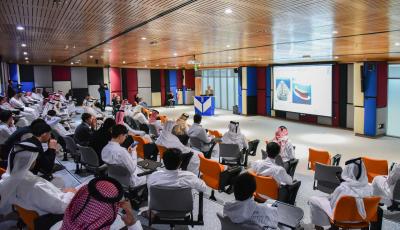
MOT Introduces High Schoolers to Maritime Specializations, Future Careers

The Ministry of Transport concluded an awareness event aimed at raising high school students’ knowledge of the maritime industry and its academic and professional specializations. Held by the MOT, represented by its Maritime Affairs, in cooperation with the University of Doha for Science and Technology and Ministry of Education and Higher Education, the event featured an interactive program of workshops, presentations, and field visits to UDST’s maritime training and simulation facilities.The interactive workshops highlighted maritime industry’s strategic importance and role in supporting Qatar’s national economy by connecting it with global markets through exports like LNG and imports that fulfil daily needs and projects execution, plus its role in trade movement and supply chains efficiency.Explaining MOT’s role in regulating the maritime industry in a way that enhances its efficiency and sustainability, with numerous missions and services related to vessel registration, licensing, inspection and control, safety compliance, international agreements and standards, and marine life protection, was also part of the workshops.MOT’s Assistant Undersecretary for Maritime Transport Affairs Eng. Abdulaziz Abdullah Al-Sulaiti, who attended the event and spoke to students, highlighted the importance of equipping Qatari youth with knowledge and skills needed for the future amid fast-paced technological advancements, particularly in marine engineering and maritime navigation. He also encouraged youth to discover maritime specializations where they may find passion in fields they may have never thought of.UDST also made a presentation on marine engineering with the necessary details and information students need if they would pursue these careers on the job market. Students also experienced simulation workshops to learn more about engineering and technical aspects of the industry.The MOT continues its efforts to raise awareness among Qatari students on maritime specializations and encourage them to pursue these fields, aiming to prepare a qualified national workforce equipped with both academic and practical expertise to meet current and future needs of national entities operating in maritime transportation and logistics in step with national strategies and the QNV 2030. For MOT, this would increase reliance on specialized national talent in areas such as vessel operations and maritime management and contributes to developing maritime legislation and policies and enhancing maritime oversight and inspection activities.Event Video Highlights :  

Minister Heads Qatar Delegation to 7th Worldwide Air Transport Conf.
Tuesday, November 17, 2026
Minister Heads Qatar Delegation to 7th Worldwide Air Transport Conf.

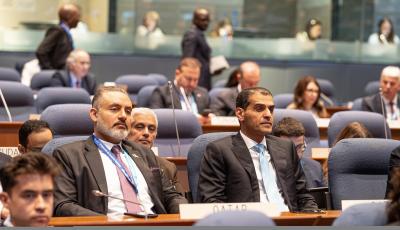
Minister of Transport H.E. Sheikh Mohammed bin Abdulla bin Mohammed Al Thani has headed the Qatari delegation to the Seventh Worldwide Air Transport Conference (ATConf/7), which opened at the headquarters of the International Civil Aviation Organization (ICAO), in Montreal, Canada, yesterday.The Minister attended the opening ceremony in attendance of ICAO Council President H.E. Toshiyuki Onuma, ICAO Secretary General H.E. Juan Carlos Salazar, several ministers, heads of delegations and international organizations, and officials and experts in air transportation.ATConf/7 is held under the theme “Air Transport: Powering Global Connectivity, Economic Development and Resilience in a Dynamic World”, providing a global forum for Member States and key stakeholders to engage in strategic dialog on the future of international air transportation.In this context, the conference will over 5 days seek, inter alia to advance economic regulatory frameworks to adapt to evolving market trends and technologies by leveraging data, enhance industry resilience by addressing workforce, supply chain, market access, emergency response gaps and consumer protection, mobilize blended financing to support civil aviation infrastructure, shape economic policy foundations for innovation and emerging technologies, strengthen institutional and human capacity, and enable sustainable and inclusive growth in air transport.The conference is organized around 4 core agenda items: Overview of Developments in the Field of Air Transport, Fostering Aviation Growth and Air Connectivity, Strengthening Regulatory and Institutional Frameworks, and Emerging Technologies, New Business Models, and Associated Aspects.The Seventh Worldwide Air Transport Conference is scheduled to conclude with a ministerial declaration.But an Investors' Forum, the ICAO-ACI Global Aviation Infrastructure Investor Forum, was held ahead of the main event on Nov. 15. It’s co-hosted by the ICAO and Airports Council International (ACI).On the sidelines of ATConf/7, the 43rd Extraordinary Session of the ICAO Assembly will be held on Nov. 19–20 to elect four additional Member States to the ICAO Council. This follows the entry into force of two protocols to the Chicago Convention—amending Articles 50(a) and 56—which increase the number of ICAO Council Member States from 36 to 40, and the number of Member States of the Air Navigation Commission (ANC) from 19 to 21. Noteworthy, Qatar ratified both protocols in November 2017.The Worldwide Air Transport Conference, organized by the ICAO, serves as the premier global platform for formulating economic policies for international air transportation. It aims to guide long-term strategic direction of the industry. Its outcomes serve as a reference for States when drafting their own national air transportation policies.

METROLINK-BUS
Sunday, November 15, 2026
MOT Introduces 9 New metrolink Feeder Routes in 2026

The Ministry of Transport has, since the beginning of 2026, introduced nine new metrolink feeder routes, in collaboration with public transport operators, as it continues to modernize the public transit system and enhance services integration, taking the total metrolink feeder routes to 76.The new routes M102, M103, M119, M154, M304, M305, M307, M308, and M318 help expand metrolink’s service coverage and enhance connectivity between metro stations and surrounding areas, making it easier for people to reach their destinations. They serve the metro stations of Lusail QNB, Al Sudan, Sports City, Al Waab QLM, Al Qassar, and Msheireb.This expansion is part of MOT’s strategic initiatives aimed at enhancing public transit modes integration, improving first-and last-mile mobility solutions, and aligning services with user needs and demand patterns for better operational efficiency, better travel experience, and easier access to the metro network.The MOT reaffirms its ongoing collaboration with its partners and public transportation operators to develop the operational network and expand the reach of its services. The goal is to encourage higher public transit ridership and contribute to creating an integrated, efficient, and sustainable public transit ecosystem that keeps pace with the urban and population growth in Qatar and supports the realization of the QNV 2030 goals.

HE Minister Photo
Tuesday, November 10, 2026
Minister Meets with UAE Economy, Tourism Minister

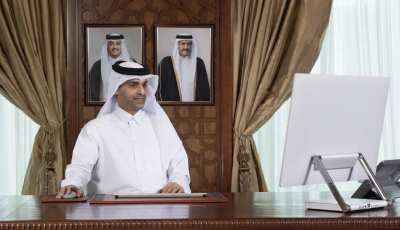
Minister of Transport H.E. Sheikh Mohammed bin Abdulla bin Mohammed Al Thani met with Minister of Economy and Tourism of the United Arab Emirates H.E. Abdulla Bin Touq Al Marri, via videoconferencing, today.The two ministers discussed venues of bilateral cooperation, and ways to enhance them in the realms that interest the two countries, particularly in air transportation and aviation.

Qatar and Bahrain Sign MoU on Land Transport and Logistics Cooperation
Sunday, November 8, 2026
Qatar, Bahrain Sign MoU on Land Transportation, Logistics Services

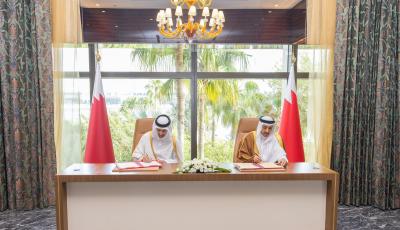
The Government of the State of Qatar and the Government of the Kingdom of Bahrain, respectively represented by the Ministry of Transport (MOT) and the Ministry of Transportation and Telecommunications (MTT), have signed a Memorandum of Understanding (MoU) for enhancing bilateral cooperation in the areas of land transportation and its supporting logistics services.Minister of Transport H.E. Sheikh Mohammed bin Abdulla bin Mohammed Al Thani and Bahrain’s Minister of Transportation and Telecommunications H.E. Dr. Shaikh Abdullah bin Ahmed Al Khalifa signed the MoU today, on the sidelines of the 30th Meeting of the Ministers of Transport of the Cooperation Council for the Arab States of the Gulf (GCC), in Manama.On this occasion, H.E. Sheikh Mohammed bin Abdulla bin Mohammed Al Thani said that the MoU comes as part of the two fraternal countries' commitment to strengthening cooperation and expanding partnership within the transportation industry, in such a way that serves mutual interests and supports efforts toward economic integration and regional connectivity.The MoU, he added, serves as an important framework for knowledge and expertise exchange with regard to the planning and development of transportation infrastructure, and enhances cooperation on rail and road connectivity projects, as well as supporting logistics services, enabling both sides to leverage their respective capabilities and expertise to advance connectivity initiatives and enhance the efficiency of logistics services.Qatar, he noted, attaches importance to reinforcing joint action with the GCC States in the transportation industry and this includes embracing innovative solutions and modern technologies to support the GCC countries’ efforts toward building a more efficient and sustainable regional transportation ecosystem—one that facilitates mobility and trade, and fosters comprehensive development.For his part, HE Dr. Shaikh Abdulla bin Ahmed Al Khalifa, the Bahrani Minister of Transportation and Telecommunications affirmed that the signing of the MoU reflects the strong fraternal ties between the Kingdom of Bahrain and the State of Qatar, as well as their shared commitment to expanding cooperation in vital sectors. He noted that such cooperation would contribute to fulfilling the aspirations of both countries and their peoples, while strengthening economic integration and regional connectivity.The Baharani Minister stated that the MoU opens up broad opportunities for cooperation in the planning and development of public transport systems, metro networks, railways and logistics services. It also provides for exploring options for rail and road connectivity between the two countries and their integration with the GCC Railway Project, alongside leveraging advanced technologies, artificial intelligence, and sustainable and smart mobility solutions.The Minister emphasized that cooperation in these areas would support the development of a more efficient and sustainable transport system, improve service quality, and strengthen connectivity across GCC transport networks, in line with the region's economic development requirements.The MoU focuses on numerous areas of cooperation of mutual interest, including examining options for bilateral rail and ground connectivity between the two countries, exploring ways to link these with the GCC Railway Project, and exchanging expertise and lessons learned on systems and strategies for enhancing the efficiency of transportation, warehousing, and supporting logistics services.Key focus areas also include developing road safety systems and regulations and enhancing relevant specifications and standards, in addition to R&D focused on future trends of mutual benefit, thereby supporting an integrated, environment-conscious road transportation ecosystem.Moreover, the MoU provides for the exchange of specifications, standards, and technical criteria, as well as policies, legislation, and regulatory frameworks pertaining to modern modes of transportation. It includes the exchange of information and technical data relating to transportation and supporting logistics.As per the MoU, the scope of cooperation also covers joint efforts in conducting trials and tests related to the outcomes of projects carried out within its framework, the exchange of visits by experts and official delegations of specialists, and joint research on transportation and supporting logistics—all of which serve to foster the exchange of expertise, technical and practical knowledge, and support the development of the industry in both countries. 

TOP