News

MOT Holds “Qatar Intelligent Transport Systems Strategy &amp; Action Plan 2027–2037” Workshop </p> <p>     MOT Holds “Qatar Intelligent Transport Systems Strategy &amp; Action Plan 2027–2037” Workshop </p> <p>     MOT Holds “Qatar Intelligent Transport Systems Strategy &amp; Action Plan 2027–2037” Workshop </p> <p>     MOT Holds “Qatar Intelligent Transport Systems Strategy &amp; Action Plan 2027–2037” Workshop
Sunday, October 25, 2026
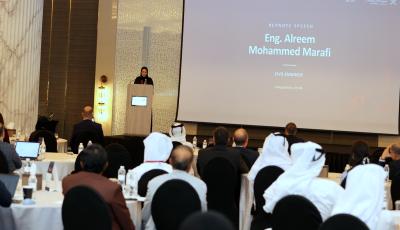
MOT Holds Workshop on New ITS Strategy & Action Plan 2027–2037

A Ministry of Transport workshop on the Qatar Intelligent Transport Systems Strategy & Action Plan 2027–2037 has concluded, in attendance of numerous representatives from relevant entities and key stakeholders.The Qatar Intelligent Transport Systems Strategy & Action Plan 2027–2037 is a brand-new strategic project being developed by the MOT to deliver a safer, more efficient, and more sustainable transportation ecosystem.As part of MOT’s approach to engage all parties concerned, the workshop discussed the progress made to date, highlighted key outcomes achieved, and touched upon upcoming phases, priorities, and future directions.The Strategy aims to establish a uniform national framework to steer relevant entities’ efforts toward developing a safer, more efficient, and sustainable transportation ecosystem through strengthening governance, enhancing network management, optimizing the use of data, supporting innovation, and building institutional capacity.Over the past few years, Qatar has invested in building an advanced transportation ecosystem, which now serves as a fundamental pillar for economic and social development and as this infrastructure matures, the priority has turned toward enhancing operational efficiency and asset sustainability, improving integration among various entities, and leveraging technology and data to both support decision-making and deliver the best possible services to users, said Eng. Reem Mohamed Al-Marafei, civil engineer with the Road Affairs Dept., MOT.In this context, she noted, the Qatar Intelligent Transport Systems Strategy & Action Plan 2027–2037, which is currently in the making, goes beyond the mere adoption of modern technologies as it focuses primarily on establishing an integrated framework for governance and institutional coordination, enhancing the effectiveness of decision-making, and improving the efficiency of implementation and monitoring—all in step with the goals of QNV 2030, thereby contributing to the realization of national objectives, and maximizing the value derived from future investments.The successful delivery of this strategy depends on effective inter-stakeholder partnerships, and shared commitment to developing an ITS that supports economic growth, enhances the quality of life, and strengthens Qatar’s regional and global profile, she noted.Eng. Al-Marafei said that developing the transportation ecosystem is no longer a single-entity responsibility; rather, it is a collective undertaking that requires stakeholders’ integrated roles and aligned efforts.

Qatar Takes Part in GCC Railways Authority Council 11th Meeting
Tuesday, October 20, 2026
Qatar Takes Part in GCC Railways Authority Council 11th Meeting

The State of Qatar took part in the 11th Meeting of the GCC Railways Authority Council, held via videoconferencing, today.Undersecretary of the Ministry of Transport H.E. Mohammed Abdullah Al-Maadeed represented Qatar at the meeting, which was attended by representatives of GCC Member States.Key topics discussed included the latest developments regarding the general agreement to link GCC countries via the Gulf Railway Project, and the outcomes of the project’s operational and executive plan.Furthermore, the meeting addressed the progress made on the projects currently being carried out by the Authority; most notably considering supporting and developing the GCC Railways Authority and preparing its strategy in a way that contributes to enhancing the Authority’s institutional work and strengthening its role in overseeing the implementation of the Gulf Railway Project.

Qatar Takes Part in IMO’s IMSO A 30
Saturday, October 17, 2026
Qatar Takes Part in IMO’s IMSO A 30

The State of Qatar, represented by the Qatar Mission to the IMO, took part in the 30th Assembly of the International Mobile Satellite Organization (IMSO A 30), held at the International Maritime Organization headquarters in London, from the 12th to the 16th of October.The IMSO A 30 examined several important matters, including the resilience and reliability of recognized satellite services supporting the Global Maritime Distress and Safety System (GMDSS), established and regulated by the IMO, as well as the performance and resilience of the Long-Range Identification and Tracking (LRIT) system.Qatar’s participation reflects its commitment to enhancing international cooperation, supporting the efforts focused on developing marine telecommunications systems, and enhancing the safety and security of the global maritime transportation industry.

MOT Wins 1st Place in Dubai Award for Sustainable Transport Innovation Category
Thursday, October 15, 2026
MOT Wins 1st Place in Dubai Award for Sustainable Transport Innovation Category

The Ministry of Transport’s Qatar Activity-Based Transport Model (QABM) has won first place in the Innovation Category of the Dubai Award for Sustainable Transport (DAST).The DAST award recognized QABM’s excellence as an innovative national tool supporting strategic transportation planning and evidence-based, data-driven decision making.The award was received by the Undersecretary of the Ministry of Transport H.E. Mohammed Abdullah Al-Maadeed, at the award ceremony held today under the patronage of His Highness Sheikh Hamdan Bin Mohammed bin Rashid Al Maktoum, Crown Prince of Dubai, Deputy Prime Minister, Minister of Defence, and Chairman of the Executive Council of Dubai. The event was also attended by several CEOs from the transportation industry from the MENA region.This achievement reinforces Qatar’s position in developing innovative, data-driven transportation solutions. It also supports the MOT’s efforts to build an integrated, sustainable and resilient transportation ecosystem that improves the quality of life, enhances the efficiency of infrastructure investment, and responds to Qatar’s future growth and development requirements.“This achievement also recognizes the Ministry’s efforts to develop an advanced national transportation modelling system. QABM simulates people’s daily activities and travel patterns, analyzes transportation demand, assesses network performance, and tests the potential impacts of future projects and policies before implementation. This supports more efficient planning and investment across Qatar’s transportation system,” said MOT’s Assistant Undersecretary for Land Transport Affairs Eng. Abdullah Saif Al-Sulaiti.Winning first place, he added, “reflects MOT’s Land Transport Affairs’ commitment to advancing innovation in transportation and using evidence and data to support decision-making based on systematic analysis and demonstrates the MOT’s commitment to developing advanced planning tools that enhance the efficiency of the transportation system and strengthen the integration of strategic and operational planning.”Eng. Al-Sulaiti noted that this direction supports the objectives of the 3rd Qatar National Development Strategy, particularly its ambitions for leadership in digital government and the development of Government Excellence and the advancement of the model will not stop at this stage; it will serve as a foundation for automating the use of big and real-time data and for the continuous updating and improvement of the model through AI and digital-twin technologies.This direction, Al-Sulaiti said, “supports the objectives of the 3rd Qatar National Development Strategy, particularly its ambitions for leadership in digital government and the development of Government Excellence. The advancement of the model will not stop at this stage; it will serve as a foundation for automating the use of big and real-time data and for the continuous updating and improvement of the model through AI and digital-twin technologies.”Eng. Al-Sulaiti explained that the future development program aims to expand the model’s user base to include both planning and operational entities. It will also progressively advance the model from a long-term strategic planning tool into an integrated platform that supports operational planning, traffic analysis, and transportation and mobility planning for major events.Eng. Al-Sulaiti explained that the future development program aims to expand the model’s user base to include both planning and operational entities. It will also progressively advance the model from a long-term strategic planning tool into an integrated platform that supports operational planning, traffic analysis, and transportation and mobility planning for major events, he said.The model enables the assessment of a wide range of transportation scenarios and policies, including public transportation network development, parking management, Park & Ride services, transportation demand management, and the integration of land-use and transportation planning. It also supports the assessment of the anticipated impacts of infrastructure projects and different transportation policies.The Ministry has also developed the Qatar Transportation Model Visualizer (QTMV), a secure and interactive digital platform that presents transport model data, maps and network performance indicators. The platform facilitates access to model outputs for planners, engineers, decision-makers and government entities, enabling them to use the information in relevant studies, plans and projects.Representing a significant shift compared to traditional trip-based mobility models, the QABM simulates the daily activities and travel patterns of people, taking into account when, where, for how long, and with whom activities are carried out, as well as the mode of transport used to reach them. Furthermore, the model accounts for the interdependencies between the daily travel decisions of individuals and their households, ensuring that no single trip is treated separately from other activities and trips.The QABM includes a detailed simulation of Qatar’s transportation networks, encompassing over 182,000 road segments and nearly 65,000 intersections, in addition to public transport networks and services.The Dubai Award for Sustainable Transport (DAST) is a premier regional initiative launched in 2008 by Dubai's Roads and Transport Authority (RTA) under the patronage of Sheikh Hamdan bin Mohammed bin Rashid Al Maktoum. It recognizes and honors outstanding contributions from government bodies, semi-government entities, private companies, research centers, universities, and schools that advance sustainable mobility and green infrastructure.
MOT Strategic Partner of Qatar Boat Show 2026
Tuesday, October 6, 2026
MOT Strategic Partner of Qatar Boat Show 2026

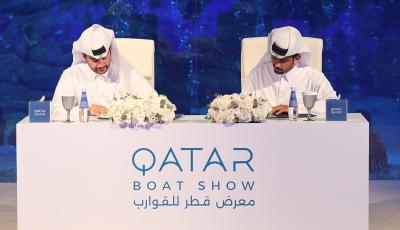
The MOT is the strategic partner of the 3rd Qatar Boat Show 2026, to be held this Nov. 4-7 at the Old Doha Port.The MOT remains committed to supporting such major national events that contribute to enhancing Qatar’s global ranking in areas of tourism, marine activities and superyachts.

MOT Takes Part in 26th Technical Committees Joint Meeting
Monday, September 28, 2026
MOT Takes Part in 26th Technical Committees Joint Meeting

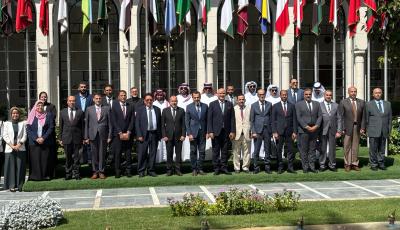
The Ministry of Transport is taking part in the 26th Joint Meeting of the Technical Committees for Land, Sea, and Multimodal Transport, which opened at the headquarters of the Arab League, in Cairo, today.Attended by representatives and experts in transportation industry from the Arab countries, and several organizations, and Arab, regional and international unions, the two-day meeting agenda includes discussions on several topics related to transportation and logistics in the Arab region.On top of the agenda are the Arab Agreement to Regulate Passenger Land Transport between and across the Arab States, and a proposal to adopt the Arab Union of Land Transport’s electronic portal as the designated online gate for land transportation information across Arab countries; in a significant step toward digital transformation and standardization and exchange of transportation-related data and information.The meeting also discusses standardizing specifications for dimensions and axle loads for trucks operating between Arab countries to help enhance the smooth flow of road transportation and make transportation operations among them easier.Additionally, the meeting addresses a draft agreement to regulate the procedures of the maritime transportation of passengers and goods among Arab States, the development of a regulatory framework for a uniform Arab road safety strategy, and the preparation of a draft Arab strategy for digital transformation in transportation to enhance operational efficiency, simplify services, ensure transparency and traceability within supply chains, and reduce time and costs.Moreover, the meeting touches upon the logistical integration and Arab food security through intraregional development corridors based on a memo submitted by the Republic of Iraq, as well as the impacts of the geopolitical developments on supply chains in the Arab region.

TOP